The Saint Anthony Messenger answers questions about the origins of the next two days on the Christian calendar. The following are excerpts from the Saint Anthony Messenger report.
When you think of Halloween, what comes to mind? For a lot of people, Halloween has become synonymous with candy, costumes, scary stuff, witches, ghosts and pumpkins. But do you know the Christian connection to the holiday?
The true origins of Halloween lie with the ancient Celtic tribes who lived in Ireland, Scotland, Wales and Brittany. For the Celts, November 1 marked the beginning of a new year and the coming of winter. The night before the new year, they celebrated the festival of Samhain, lord of the dead. During this festival, Celts believed the souls of the dead, including ghosts, goblins and witches, returned to mingle with the living. In order to scare away the evil spirits, people would wear masks and light bonfires.
When the Romans conquered the Celts, they added their own touches to the Samhain festival, such as making centerpieces out of apples and nuts for Pomona, the Roman goddess of the orchards. The Romans also bobbed for apples and drank cider, traditions which may sound familiar to you. But where does the Christian aspect of the holiday come into play? In 835, Pope Gregory IV moved the celebration for all the martyrs (later all saints)from May 13 to November 1. The night before became known as All Hallows' Even or holy evening. Eventually the name was shortened to the current Halloween. On November 2, the Church celebrates All Souls Day.
The purpose of these feasts is to remember those who have died, whether they are officially recognized by the Church as saints or not. It is a celebration of the "communion of saints," which reminds us that the Church is not bound by space or time.
The Catechism of the Catholic Church says that through the communion of saints "a perennial link of charity exists between the faithful who have already reached their heavenly home, those who are expiating their sins in purgatory and those who are still pilgrims on earth. Between them there is, too, an abundant exchange of all good things" (CCC #1475).


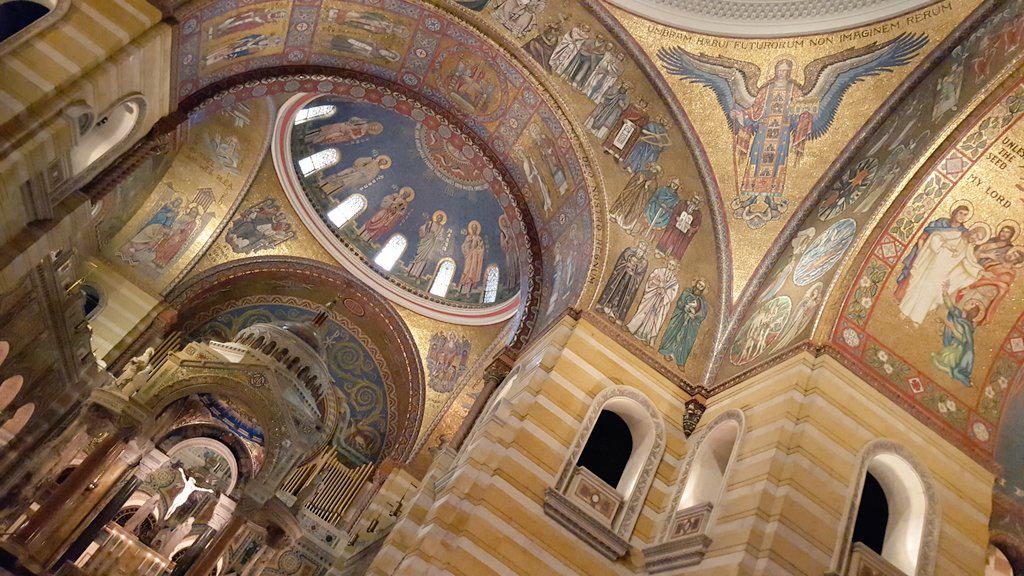
 It is not too late to get a head start on preparing the readings for this Sunday the Thirtieth Sunday of Ordinary Time.
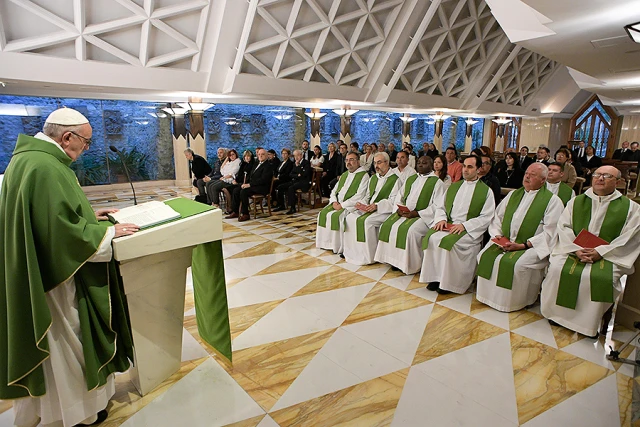 Pope Francis preached Monday about the idolatry of money, which causes us to ignore those in need, allowing others to go hungry and die while we turn money and worldly possessions into false gods.

 Our Sunday Gospel puts before us the incident where some influential men who were opposed to Jesus tried to set him up for big public embarrassment and destroy his credibility.In front of a great crowd — perhaps equivalent to asking him on live TV — they asked him whether it was lawful to pay taxes to the emperor. Their devious idea was that if Jesus argued against the tax, they could accuse him to the Roman governor of urging rebellion against Rome. On the other hand, if he endorsed the tax, the common people who hated their Roman overlords would likely view him as sympathetic to Rome, and thus turn away from him. For Jesus, it was — they thought — a lose-lose situation.